
From an early age, I was drawn to science, largely due to my father, a chemical engineering professor. Growing up in an environment surrounded by research and experiments sparked a passion in me that has never faded, leading me to study chemistry in college and later pursue a PhD in materials engineering.

For the past 25 years, I’ve dedicated my career to research and innovation, with a specific focus on the formulation and characterization of construction materials and the development of products and solutions for the building industry. I have successfully managed scientific collaborations with universities worldwide, filed 37 patents and authored 30 scientific papers. My contributions have led to the development of over seventy products for a range of applications. At Ecocem, I have found a place to channel my passion into progress for one of the world’s hardest-to-abate sectors.
Since Ecocem was established 25 years ago, our relentless focus has been on cracking cement and concrete’s carbon challenge. Cement accounts for almost 8% of global CO₂ emissions, largely due to emissions released in the manufacturing of clinker, the key reactive material in cement and concrete. We have focused on re-formulating binders from first principles—drawing in external expertise, challenging assumptions and embracing science-led disruption. Our 46-person-strong Research & Innovation team focuses on developing new low-carbon cements, admixtures, industrial mortars, concretes and exploring innovative solutions in building chemistry.
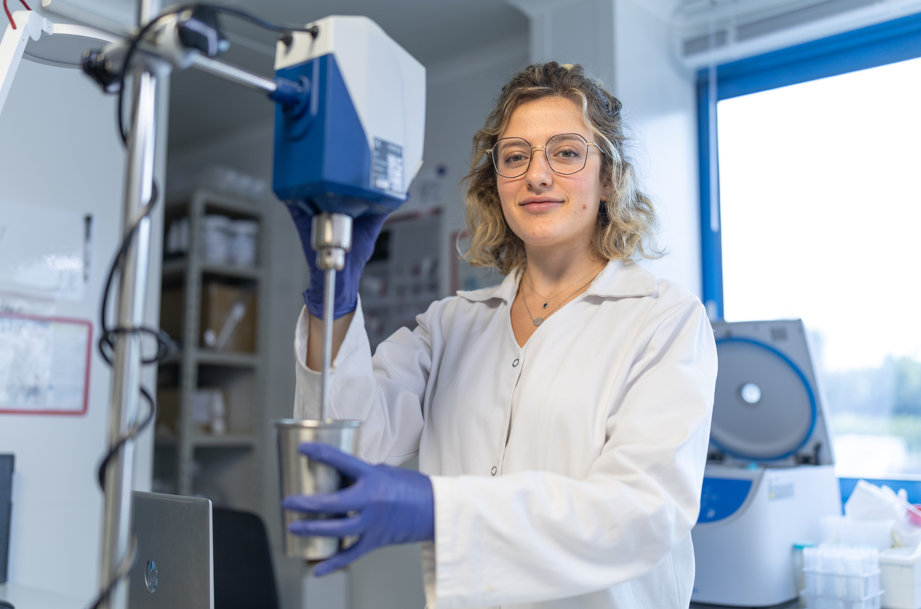
In addition, we have academic partnerships with more than 10 universities around the world, including the University of Paris-Saclay, the University of Toulouse, the Technical University of Munich, the University of Toronto, Missouri University of Science and Technology, the Indian Institute of Technology Delhi, the University of São Paulo, the universities of Leuven and Eindhoven and the universities of Florence and Naples.
Critical to success is the ability to transfer developed innovations to real-world applications. Solving a technical challenge is an important first step, but how we manage the transition from lab to live project is what delivers impact at scale. Examples of our low-carbon solutions in action include the Grand Paris Express and Olympic Village in Paris, the Tottenham Hotspur Stadium and HS2 High-Speed Railway in the UK and the Aviva Stadium in Ireland.
It is this focus that has led to the development of ACT, our breakthrough scalable, low-carbon cement technology that cuts CO2 emissions by up to 70% compared to traditional cement. ACT replaces carbon-intensive clinker—responsible for 90% of CO2 in cement—with alternative Supplementary Cementitious Materials (SCMs).
Excitingly, ACT is well past the pilot phase and is now a near-commercial reality. We are aiming for commercial availability in 2026. ACT’s performance has been confirmed in several trials. With the support of Innovate UK and in partnership with, among others, Sisk and their client Quintain, we completed a full-scale demonstrator project at Wembley Park. An independent evaluation concluded that ACT not only delivered the required workability, durability and strength in the range of concretes it was used to make, but also reduced the carbon content by more than 70%.

ACT trials have also been completed with companies such as Bouygues Construction and Cemex France, with additional trials on the horizon. We have also recently announced that we will be investing over €170 million in ACT production lines in France.
Looking forward, there is still work to be done. Due to the inconsistent availability of some SCMs, we need to continue to innovate to find other materials that can replace clinker and to deliver the next generation of low-carbon cementitious materials.
As part of this drive, we have been awarded €4 million in EIC Pathfinder research funding to investigate and develop breakthrough Electric Arc Furnace (EAF) slag. Ultimately, our objective is to enhance the performance of EAF slag as an SCM.
Seeing these innovations develop from idea stage to practical, scalable solutions is extremely motivating. And as much as I enjoy the technical challenge of decarbonizing cement, it is the opportunity to contribute to a sustainable future that excites me the most.
Science and innovation are ultimately about curiosity, perseverance, and the belief that even small breakthroughs can drive significant change. For me, innovation is more than a career—it is the thread connecting today’s challenges to tomorrow’s solutions.

Following ASTM C1157 certification, screening life cycle assessment validates Ecocem’s pathway to delivering high-performance, low-carbon cement at scale in the U.S. market.
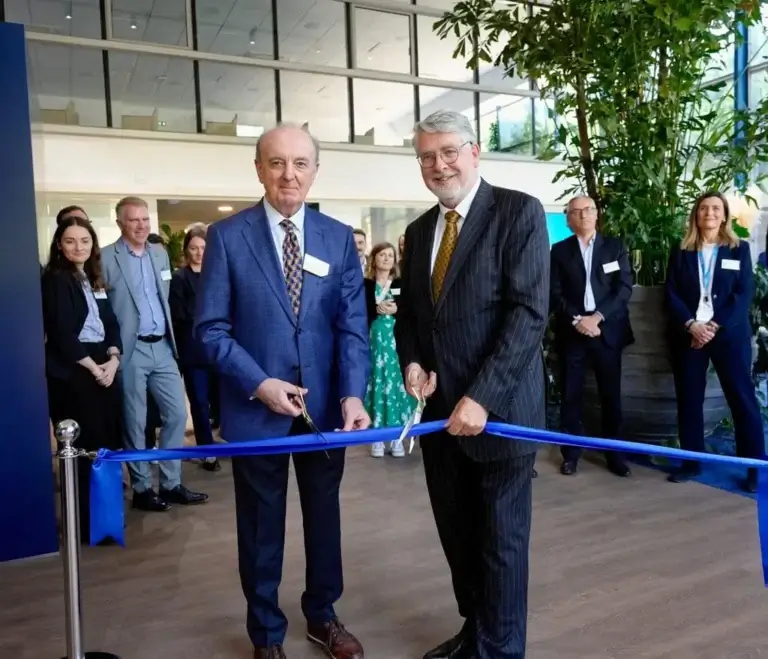
The centre represents a significant investment in innovation and will play a key role in Ecocem’s strategy to deliver decarbonisation solutions to the cement and concrete industries.
