Ecocem is proud to sponsor Irish sailor Pamela Lee as she prepares for the legendary Route du Rhum race.
Together, we are championing performance, innovation and sustainable progress.

1. For anyone who may not know you, could you tell us a little about yourself and how you first became involved in sailing?
I’m from Greystones, County Wicklow. I became involved in sailing because it was my dad’s obsession. My mum and dad met through sailing, so it has always been part of our family life.
Growing up, all our family holidays were spent packed into a camper van somewhere by an Irish lake or the sea, messing around in boats or anything that would float. Sailing was always part of what we did at weekends and during the summer, and it is still something my dad does all the time. So, really, it came from being a family activity.
2. What is the Route du Rhum?
The Route du Rhum is a solo transatlantic race held every four years, from Saint-Malo in France to Guadeloupe in the French Caribbean.
The race is based on historic trade routes and is steeped in French maritime history. It is known as one of the toughest solo transatlantic races in the world. Because it takes place only once every four years, it is a huge milestone in offshore sailing—almost like the Olympics or the World Cup of the sport.
Simply reaching the start line and competing in the race is a huge achievement.
3. What inspired you to take on the challenge of the Route du Rhum?
I was inspired to take on the Route du Rhum because I had been dreaming of becoming a professional offshore sailor and working towards that goal for quite some time. It started as a small dream, and eventually I found a route that allowed me to work towards it.
I have always wanted to work harder, improve my skills and create opportunities for myself. I learned quite early in life that there can be many ceilings—and many glass ceilings—particularly when you are a woman in a male-dominated sport or industry. You often have to create your own path.
The Route du Rhum is a pinnacle of offshore sailing. I felt that if I could reach the level required to compete in it, I would know that my skills and standards as a sailor were strong enough to build my own career and create a pathway for myself.
I was also at the start of the previous Route du Rhum, and it really struck me how few of the competitors were women, even though sailing is a gender-neutral sport in which men and women compete together. Women represented less than five per cent of the competitors. The race village is a huge festival, with many children and school groups visiting the boats. It made me sad to realise that the young girls there saw fewer people like themselves among the skippers and heroes being celebrated.
I thought that if I could get there, I could help shift that number in a positive direction. That really meant something to me.

4. What does it mean to be the first Irish person to compete in the race?
I think there is something really magical about being Irish. Obviously, I’m biased, but we really are a special country and a special people. We are a small island with a huge impact on the world.
We are a small population that goes out and does things—and when we do them, we do them well. Look at our musicians, artists and sportspeople. Being part of that story of Irish people who take on challenges and make an impact in the world is really important to me. I’m very proud to represent Ireland in that way.
Taking a step forward in an area where we have not been before makes me very proud. I also love the connection with France. The relationship between Ireland and France has always been strong, and it continues to grow because France is our closest European neighbour. Having lived in France, it has been special to see that connection, much of which is driven through sport, including rugby.
It feels really meaningful to be an Irish person helping to strengthen that connection while competing in this legendary French race. Ireland also has a very special maritime history and relationship with the sea, so pushing forward in this area feels both right and exciting.
5. As the race approaches, how are you feeling?
I’m feeling all of the above: excited, nervous and focused. I’m especially focused because there is still a lot to do. The boat and I both need to be prepared, and those two things have to happen simultaneously.
It is a very busy time, but I’m working hard and staying focused because I want to be as ready as possible when we reach Saint-Malo. Then I can sit back and enjoy engaging with the audiences and sponsors who have supported me to get to this point, share those moments with them and get excited about the race.
So, focused first and excitement later.
6. What does a typical day of preparation look like?
A typical day is pretty full-on. I’m working seven days a week. I usually get up early and head to the gym or go swimming. The physical workout helps me get into the best possible mindset.
I also try to make time for visualisation in the morning, even if it is only for five minutes, because I am working on the mental side of the challenge as well. Then it is straight down to the boat, where we are either sailing to test things or carrying out training.
I also have a team working with me on the technical side. We are constantly moving forward, while fitting in administration, interviews, planning and preparation. After a day at the boat, I usually come home and spend a few hours on the computer, planning the next steps, moving things around and making sure everything keeps moving.
7. What is the biggest physical or mental challenge in preparing for a solo transatlantic race?
The biggest challenge is that I have never done it before.
The longest I have been offshore on my own is five days, while this race is expected to take at least 15 days—three times as long. It is difficult to know where I will be mentally and physically after ten days at sea, so I am trying to prepare as well as possible for the unknown.
That involves a lot of self-awareness: imagining how I might feel, thinking ahead and putting things in place now to help prevent a complete crash. I am also speaking to other people and learning from their experience. Ultimately, though, the hardest thing is that you do not know exactly what you are dealing with until you are out there.

8. What has been a defining moment in your sailing career?
A really defining moment for me was creating the challenge of setting the world record for the fastest sailing around Ireland. It was my first major project as a skipper in my own right.
The project was built around the idea of doing something in our sport that pushed a new boundary. It also focused on communicating an idea through a sporting challenge, which is closely linked to how I have developed the Empower campaign. It is about telling a story and communicating an idea through sport.
We committed to the challenge at the last minute and went into the unknown. Taking that big step, doing something I had never done before and succeeding was incredibly powerful. It showed me the impact that sporting projects and challenges can have. That experience gave me the confidence and the motivation to keep moving forward because I saw the influence such a project could have.
9. How are you preparing mentally?
I’m working with mental coaches to develop my mental preparation. As I said, it is challenging because I have never done this before, so it is difficult to know exactly where I will be mentally.
A lot of it involves getting to know myself. In daily life, I am practising how to recognise when my mood is dropping and learning to respond to what I need when I am tired or under pressure. I’m really trying to tune in to myself.
I am also working on visualisation and trying to understand how my mind works, including my triggers and warning signs. It is a work in progress, but I think I will come out of this knowing a lot more than I did going in. It has been really interesting.
The skills I am learning will help me in life, whatever happens, and I think they could be useful to everyone. Hopefully, I will be able to share more of that after the race.
10. What will be going through your mind when you finally leave the start line?
I’m already working on that through my mental training. I want to have some control over what is going through my mind at that moment.
What I want to be thinking is: “We did it. It’s down to me now. Here we go—let’s have some fun. This is years of work in the making, so let’s make the most of it. Let’s apply what we have learned and get the job done.”
11. What advice would you give to young people—and particularly Irish women—who dream of pursuing something challenging or unconventional?
The pathway is not always clear, particularly when something has not been done before. There may be a glass ceiling in place, but do not be discouraged by that. You might be surprised by the opportunities and doors that open as you move forward.
Try to identify people who have done something similar and be creative in finding ways to create your own pathway. Be prepared to pivot, too. You may have an idea of how you will achieve your dream or goal, but it may not work out exactly that way. You might need to take a different route and come back to your original path later.
The experience you gain along the way will ultimately help you reach your goal. Stay open and curious, and speak to people who may be able to help. Look for mentorship and build a strong support network around you.
12. What does the support of your sponsors and supporters mean to you?
The support of my sponsors and supporters means everything. As I said earlier, this is about much more than achieving something for myself. That is part of it, of course, but it is also about the wider impact that a sporting challenge can have.
I really believe that, through communication and creative sponsorship, we can make a huge impact. We should not underestimate the power of storytelling or the importance of role models. Women’s sport is making huge progress towards equality, and it is important to have a wide range of role models—people, and particularly women, doing different things.
The fact that sponsors have joined the Empower Project is incredibly meaningful to me. It shows that other people believe in what I believe in and want to share in that goal and that impact. It is really powerful.
The sponsors are also setting an incredible example of what it means to support a dream, a project or an athlete’s career from an early stage. They have chosen to get behind the story and the idea, rather than simply looking for quick and easy results. It means a lot that they have made it possible for me to be here and that they believe in what I believe in.
It feels as though we are working towards something together, and the same goes for all the supporters. So many people are getting behind the Empower movement, and that gives me huge motivation to do everything I can to put on a good show. Everyone will be there on the boat with me. I will be thinking of them during the tough times and the good times.
It makes it a family, a movement and a shared project. It means the world.
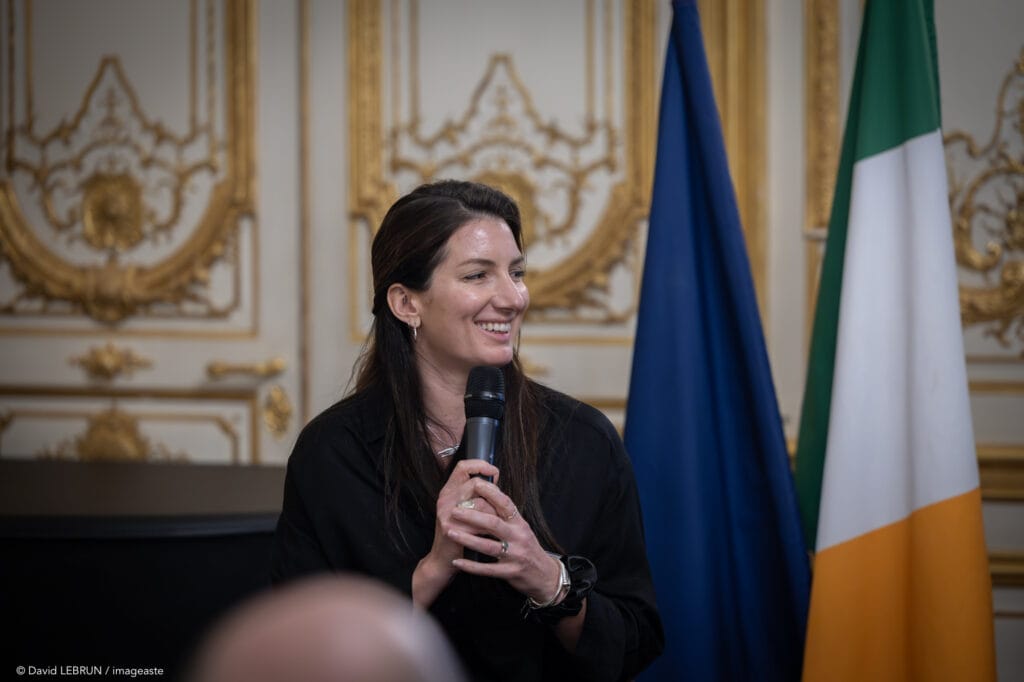
1. What does Ecocem’s continued support mean to you?
Having Ecocem in the second year of the partnership means the world to me. I think Ecocem’s ethos is built around having a goal or a dream, seeing something that no one else sees and working towards it over an extended period of time. The team understands that having people behind you at an early stage is essential.
For me, Ecocem’s support allowed the project to get off the ground—to move from a concept, an idea and a dream to the full professional project that is now ready to take on the Route du Rhum. The continuity of that sponsorship is rare in sport, and it really matters. When you are starting from scratch every year, it is very difficult to grow.
Having that continuity with an Irish-French company also means a lot because there is a shared understanding between us. It has been great to work with Ecocem in both France and Ireland. Together, we have developed the partnership and built momentum, which is really important in this type of relationship.
2. What do you personally identify with in Ecocem’s story?
I really identify with Ecocem’s story, its ambition and the drive behind it. Ecocem looked at a sector that many people had written off as impossible to decarbonise. Instead of accepting that assumption, the company built something different.
I understand that instinct. Throughout my career, I have been told that the route I wanted did not exist, so I have had to build it myself. That feels very aligned with Ecocem’s story.
Ireland does not have an established pathway into offshore sailing, nor is there much support for funding or connecting with sponsors. It is a new area that Ecocem and I are exploring together. The campaign has been designed from scratch, and we have built it together. That feels very aligned with how Ecocem has moved forward.
I hope to contribute to the impact Ecocem has created. In both cases, it is a story of changing the system rather than simply working within it. Ecocem did not just build better cement; it changed the recipe altogether. I am trying to do the same—to prove that you do not have to follow what is already laid out in front of you.
You can create your own route and change the direction in which an industry or a sport moves. Solo racing requires first-principles thinking. Alone on the boat, convention is not enough; what matters is what works, based on testing and experience. You have to be creative because every situation is different. I think that speaks to much of what Ecocem has built.
3. What parallels do you see between offshore sailing and Ecocem’s work?
The parallels are in innovation, resilience and doing things differently. That is where the partnership has been so powerful.
The material science and development work that Ecocem does is similar to setting up the boat, designing the sails, reading the weather and managing the systems. It involves making small, measurable gains and testing rigorously. You keep what works, try again and continue moving forward. It is a constant mindset of testing, learning and finding a better way to do things.
Resilience is another important parallel. Ecocem is changing its industry and has been working towards that goal for a long time, step by step. I am sure there have been many barriers along the way, but the team has kept going.
Offshore sailing is similar. You never know what setback is around the corner, but you have to deal with it head-on, work out how to solve it and keep going. Whether you are racing for five or 15 days or building a campaign over several years, you cannot let setbacks stop you.
Doing things differently is about believing in yourself and using evidence rather than opinion. You cannot argue your way across the Atlantic, and you cannot argue your way through cement.
It is about not taking no for an answer, pivoting when necessary, finding people who want to work with you, sharing a dream, building a strong team and believing that the future does not have to look like the past. Things can change, evolve and improve.
I apply that optimism and creativity to my sailing, my racing and my career as a sailor, and I see the same qualities very clearly in Ecocem.
4. What would you like to say to the Ecocem team?
First of all, a huge thank you—and I mean that very specifically. Ecocem backed me when the plan was still on paper and stayed behind me through the hardest moments of getting to the start line. The team has been there throughout the journey, and that means a great deal to me.
I will be thinking of you all while I am racing and sharing the entire journey: the highs, the lows and everything that happens in between. I hope you enjoy sharing it with me. You will be there at the start line and the finish line, and with me through whatever happens in between.
I hope the campaign gives you inspiration, motivation and the chance to dream, while also representing the positive impact that Ecocem—the company you are part of—is having on the world.
Expanding opportunity
Through her #EmpowHer campaign, Pamela is helping to increase visibility and participation for women in offshore sailing. We are proud to support initiatives that encourage broader participation and representation.
Stay close to Pamela’s campaign as she continues her journey towards the Route du Rhum.
Follow the story of #EmpowHer as we celebrate Irish innovation, sustainability and performance on the global stage: www.pamelaleesailing.com

The appointment of five new members to our Board of Directors brings exceptional technical, operational and financial expertise as we gear up for significant growth.

In his latest blog, Ecocem’s award-winning research scientist, Simon Blotevogel, speaks about research on Electric Arc-Furnace (EAF) slags, collaboration being the key to innovation, and how we are at a critical moment in our mission to decarbonise the cement industry.
