Ecocem, Europe’s leading provider of low carbon cement technologies, has today announced it has been made an industry partner of the SFI Industry RD&I Fellowship Programme. The Programme will support the temporary placement of Suhaib Salawdeh of Atlantic Technological University at Ecocem to conduct research activities into optimizing the cement technology company’s breakthrough ACT technology for Irish concrete using Irish materials.
The Programme, announced today by Minister for Further and Higher Education, Research, Innovation and Science, Patrick O’Donovan TD, will support the temporary placement of academic researchers in twelve companies, including Ecocem, to conduct research across a variety of sectors.
News of Suhaib’s placement with Ecocem follows the Irish government’s recent announcement that, effective from September, it will provide specific guidance for the use and procurement of low carbon cement and concrete in public sector projects. The government went further and mandated green procurement regulations for low carbon cement, which require a 30% reduction in clinker use and the elimination of high clinker cement for all government and public works.
Ecocem has a long history of supplying low carbon cement technologies in Ireland and its latest breakthrough low carbon cement technology, ACT, is capable of decarbonising emissions from traditional cement by 70%. Suhaib’s placement will accelerate our efforts to make this technology available to the Irish construction industry as it looks to accelerate its adoption of low carbon cement and concrete in response to the recent government mandate.
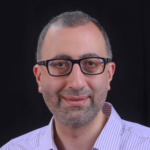 Suhaib Salawdeh, Atlantic Technological University, said: “The opportunity to join Ecocem and to collaborate on our shared goal of solving cement’s carbon problem is one I am truly grateful for. Thanks to this fellowship, my work can support Ecocem and Ireland to enable ACT to be deployed as soon as possible in the Irish market and immediately address cement’s emissions at source.
Sally Anne Sherry, Managing Director of Ecocem in Ireland said: “Research and innovation are at the heart of everything we do at Ecocem, and our global network of research and academic partners has enabled the validation and deployment of our technologies worldwide. Suhaib’s work with us as part of the SFI Industry RD&I Fellowship, will enable us to make these technologies available to the Irish construction industry at speed and scale”.

One of the myths about using GGBS to cut cement use is that its inclusion in a project leads to long delays on site — in particular, unfounded anxieties rise during cold weather, and when ambitious cement substitution levels are attempted.

The project brings together Irish industry and research to test how lower-carbon cement performs in Irish conditions and to build the evidence needed to support its certification and wider adoption in Ireland.
