
ACT scalable low-carbon cement technology can reduce emissions by up to 70%.

We have the know-how to take cutting edge solutions from the lab, through production, to real world application.

Your ACT questions answered, all in one place.

A lower carbon future is available now. Talk to us.
Cement is responsible for almost 8% of global emissions, producing 2.5 billion tonnes of CO2 every year.
Most of the CO2 in cement and concrete comes from the production of clinker, the critical ingredient in traditional cement, the glue that binds concrete together and is responsible for over 90% of concrete’s carbon footprint.
About one third of clinker-related emissions come from the energy used to produce clinker. Two-thirds of clinker-related emissions (process emissions) are the result of the chemical reaction that occurs when limestone is burned to produce clinker.
The production of clinker, results in an unavoidable production of CO2. While progress has been made reducing the CO2 footprint associated with the one third of emissions related to energy use, very little has been made reducing process emissions, even though these represent the largest source of CO2 emissions.
To date, Carbon Capture has been prioritised as the solution to the cement industry’s carbon challenge. It is expensive, disruptive and unlikely to be available at scale until at least 2035.
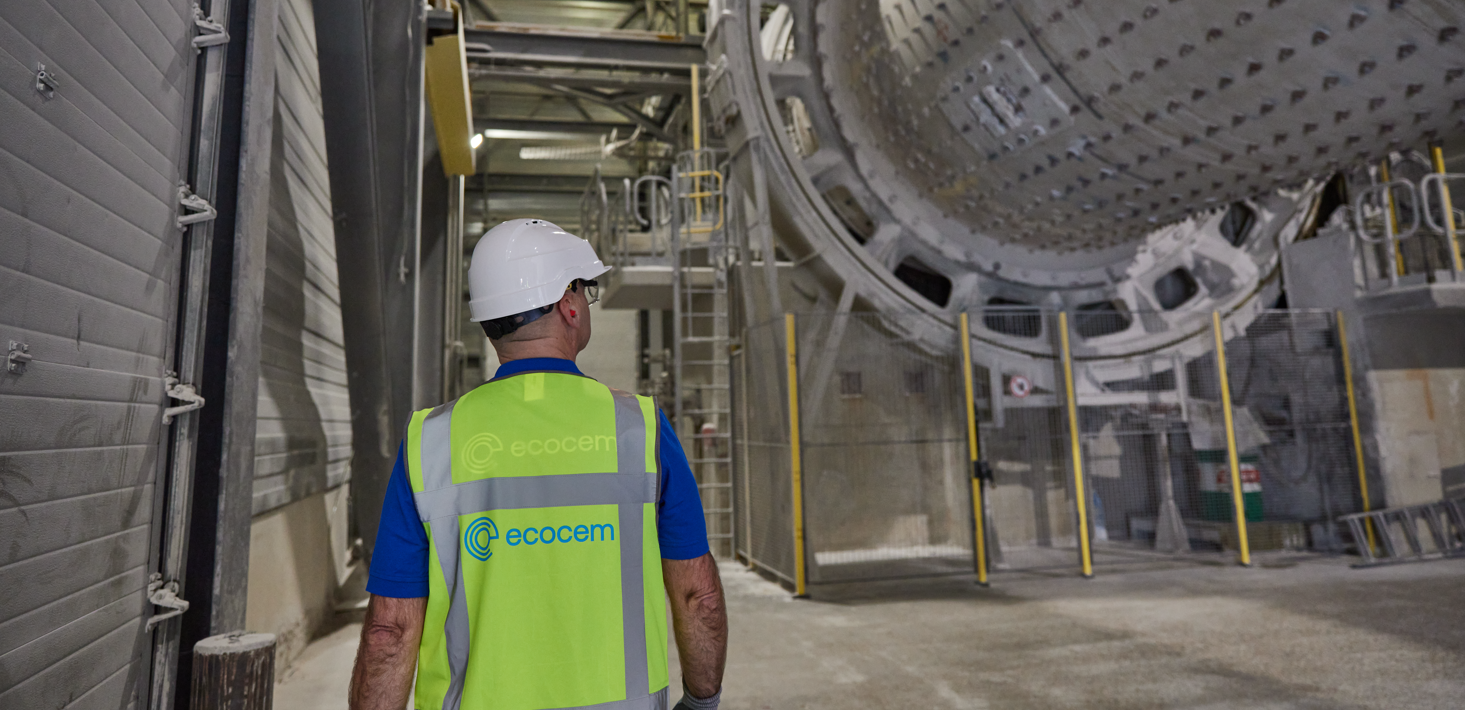
Capture the CO2 produced using CCUS (Carbon Capture Utilisation and Storage).
To date, CCUS has been prioritised as the solution to the cement industry’s carbon challenge. It is expensive, disruptive and unlikely to be available at scale until at least 2035.
Produce less CO2 by manufacturing low-carbon cements which have a lower clinker content – the key source of CO2 emissions – known as clinker substitution.
Ultimately, avoiding CO2 production in the first place is the most effective approach.

There are alternatives. Materials science has advanced to the extent that rapid decarbonisation of the cement manufacturing process without excessive cost is a reality. These advances are enabling the design of highly efficient cement that requires substantially lower volumes of clinker when compared with traditional Portland cements and use other materials with much greater efficiency.

